Approved Document B consultation: the TRA’s response
7th July 2026
Last week, the Trussed Rafter Association submitted its response to the government’s consultation on Approved Document B.
A number of changes have been proposed to Approved Document B – the UK’s statutory guidance on how to meet the fire safety requirements of the Building Regulations. These changes effect the use of combustible materials – including timber – in buildings. Many of them do not directly effect the use of trussed rafters or metal web joists, and we have left Timber Development UK (TDUK) and the Structural Timber Association (STA) to respond on these points, but the TRA has expressed its concerns about certain particular changes.
Our response to the most significant issues related to TRA members can be read below:
Question 1
Do you agree that the changes within this consultation should be aligned with existing changes to ADB coming into effect on 2 September 2029?
No
Question 3
Do you have any comments on the small but important clarifications and minor technical changes draft guidance text?
What is the definition of an element of structure? The text uses this term in relation to both single construction materials such as a joist, beam or column but also in terms of constructed elements such as joisted floor, timber frame wall or timber roof. However, Appendix B only refers to fire resistance of the latter constructed elements. 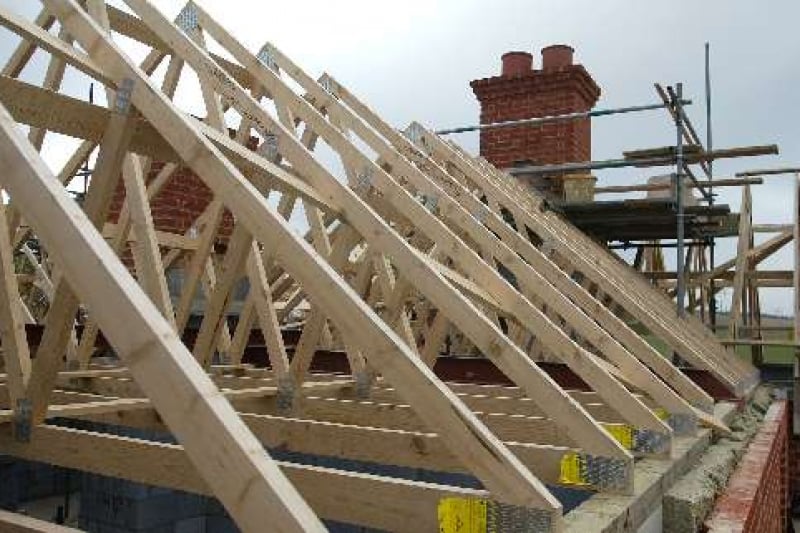
This definition becomes critical because it is not clear if fire resistance or fire protection is intended to apply to individual members or the constructed element as a whole.
Ref ID 3.06 is an example of where a more clear definition is required. Timber rafters and purlins or trussed rafters are individual structural elements, but together they form a structure which supports the roof and often a triangular gable wall. The text is not clear if it is the individual structural members or the structural roof as a whole which requires fire resistance and from which direction(s)?
Question 5
Do you have any further benefits that should be considered?
No, but based on the above the economic cost of these minor changes could be disproportionally significant to the timber sector.
Question 11
Do you have any comments on the draft guidance text?
The unclear definition of ‘Exposed elements of structure’ means the current text in section ID 5.01 could have the catastrophic implication of preventing the construction of ALL new timber roofs for residential and other types of construction. While we do not believe this to be the intended consequence, there is no specific exclusion of timber frame roof spaces within this text.
Such roof spaces are in the majority intended to be unoccupied other than for maintenance, and will be protected from direct fire expose in the habitable spaces below. In attic spaces which are intended for habitation the structural elements will be similarly protected. The guidance should make clear these strategies are sufficient for roof spaces as the suggested text of encapsulating all the structural elements within a timber roof space is not practical.
We also believe that the current proposals will give rise to unintended consequences – particularly for low rise dwellings where the structural system is an exposed structural timber frame or includes large section feature trusses, but also for other low-rise buildings with exposed structural members. Is this an intentional change? Such frames are most often constructed from oak but also from UK grown Douglas fir and larch – we are confident that preventing the use of these timbers in low-rise dwellings is not within the scope of the government’s Timber in Construction Roadmap.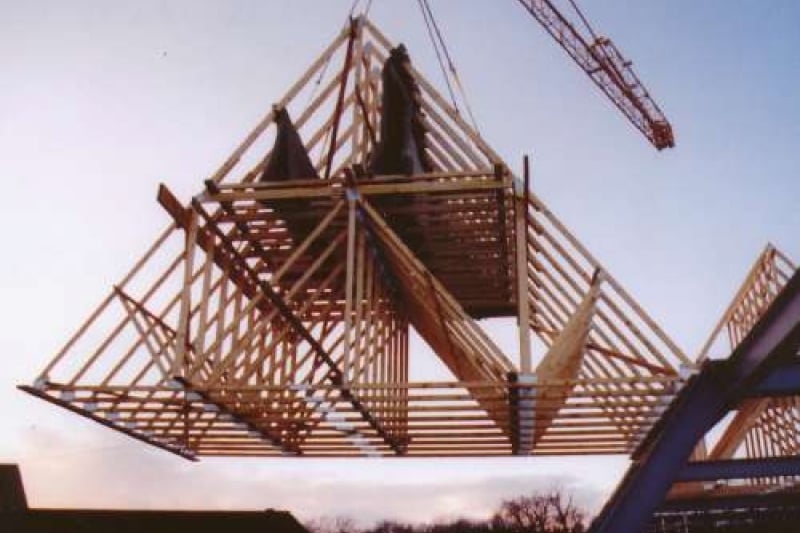
Clearly there are a significant number of historic oak framed buildings in England, many of which are currently renovated, refurbished or extended. Economically and sustainably retention and reuse of large section feature trusses within these building is the favoured option. Is there a plan for how these buildings are dealt with in the future?
The government is now analysing all the responses, and the TRA is working with TDUK and the STA to engage in further dialogue directly with the Building Safety Regulator (BSR) to ensure that the timber sector’s concerns are acknowledged.